Otto Brooks · 14 October 2026
Exploring Symbiotic Relationships Between Coastal Lichens and Rock Substrates in High-Wind Environments
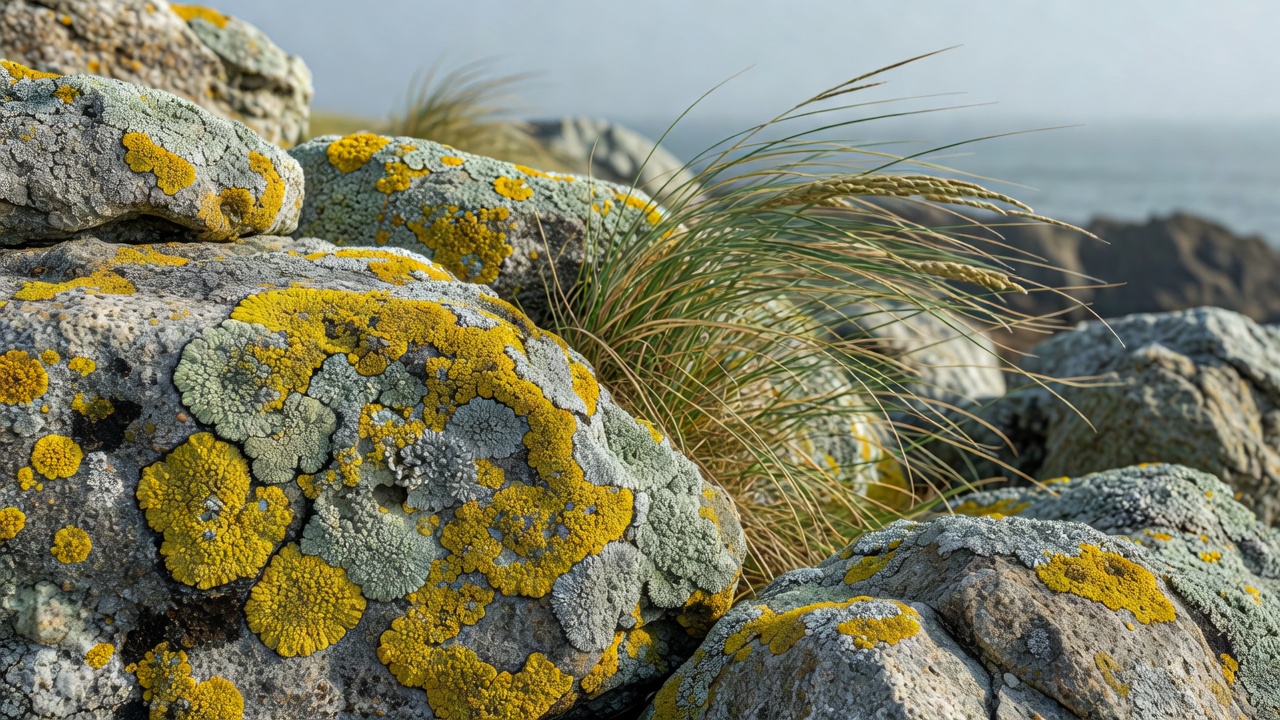
Coastal lichens form intricate partnerships with rock substrates in high-wind zones where fungi and photosynthetic partners work together to colonize bare surfaces that few other organisms can inhabit, and researchers have documented these interactions across exposed shorelines from temperate to subarctic regions since the early 2000s.
The Core of Lichen Symbiosis
Lichens represent a mutualistic association in which fungal hyphae provide structural protection and mineral extraction capabilities while algae or cyanobacteria supply carbohydrates through photosynthesis, and this arrangement allows the composite organism to endure constant salt spray and mechanical stress from sustained winds exceeding 40 kilometers per hour.
Studies from institutions such as the Environment and Climate Change Canada show that coastal species like Xanthoria parietina and Ramalina species develop thicker cortices and more robust rhizines when growing on granitic or basaltic faces, enabling them to anchor against gale-force gusts that regularly strip away looser material.
Adaptations to Persistent Wind and Salt
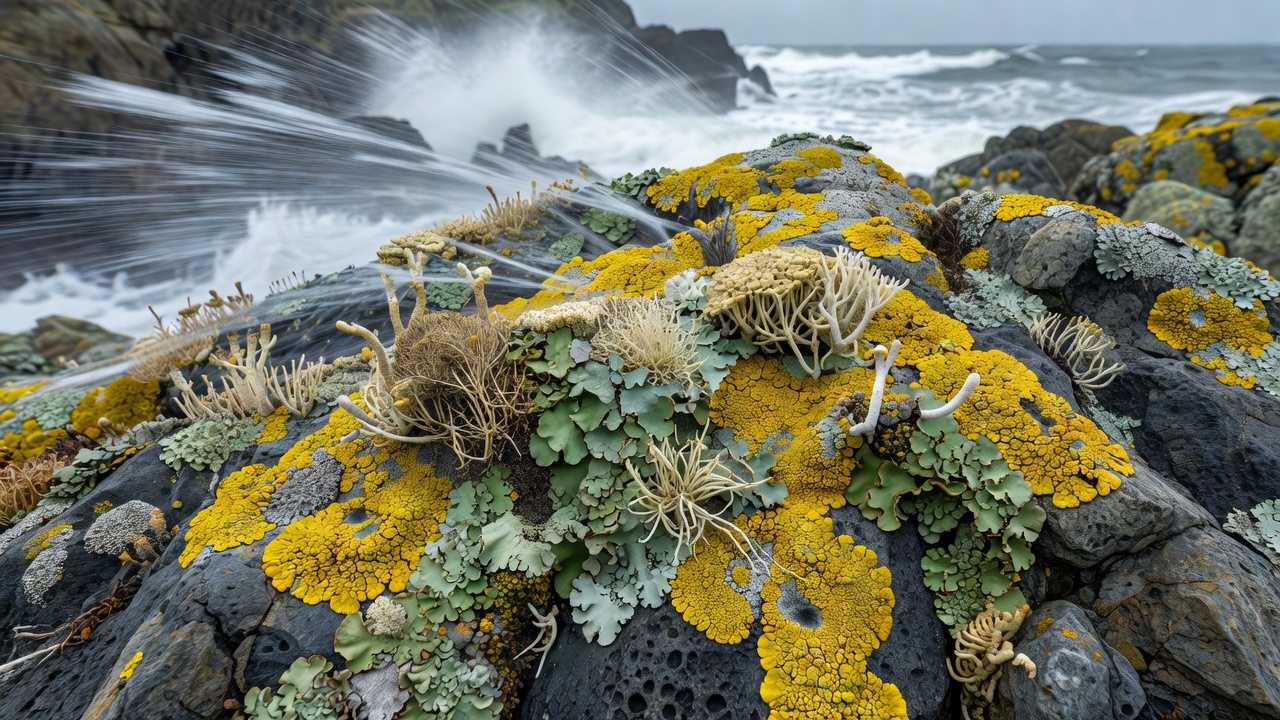
High-wind environments accelerate evaporation and impose shear forces that demand specialized attachment strategies, so lichens secrete oxalic acids that etch microscopic pits into the rock surface and create a mechanical interlock reinforced by extracellular polysaccharides.
These acids also mobilize nutrients such as calcium and magnesium from the substrate, which the fungal partner transports back to the algal cells, and field measurements taken along British Columbia's exposed headlands indicate that lichen biomass increases measurably during periods of consistent onshore flow because wind delivers additional marine aerosols rich in nitrogen and phosphorus.
Rock Substrate Characteristics and Colonization Patterns
Rock type influences colonization speed and community composition, with porous sandstones supporting faster initial establishment than dense quartzites because they retain moisture longer between storm events, and observers note that vertical faces oriented perpendicular to prevailing winds accumulate thicker lichen mats than sheltered lee sides.
Mineral veins and microfractures serve as starting points for hyphal penetration, and data collected by geologists working with the Australian Antarctic Division reveal that lichens accelerate weathering rates by up to 0.2 millimeters per year on granodiorite surfaces in high-wind coastal zones, gradually converting bedrock into finer particles that contribute to soil development over decades.
Seasonal and Climatic Influences
Wind patterns shift with seasonal transitions, and lichen metabolic activity peaks during cooler, moist months when fog and drizzle replenish water stores depleted by summer winds, while researchers tracking growth rings in species such as Usnea subfloridana along the Oregon coast have recorded incremental thallus expansion of 1.5 to 3 millimeters annually under average conditions.
October 2026 brought a series of intense extratropical cyclones to the North Pacific that delivered record salt deposition, and preliminary surveys by university teams indicate that established lichen communities resisted detachment better than expected, suggesting that prior exposure to chronic high winds had selected for individuals with enhanced adhesion chemistry.
Ecological Roles and Broader Implications
These symbiotic communities stabilize rock surfaces against further erosion, provide microhabitats for invertebrates and tardigrades, and contribute organic matter that supports pioneer vascular plants once sufficient soil accumulates, and monitoring programs in northern Europe document that lichen cover correlates with reduced rockfall frequency on wind-exposed cliffs.
Nutrient cycling benefits extend beyond the immediate substrate, because wind redistributes lichen fragments and spores across wider coastal landscapes, and isotopic analyses performed at research stations in New Zealand confirm that marine-derived nitrogen fixed by cyanolichens reaches adjacent terrestrial vegetation through this aerial transport pathway.
Conclusion
Coastal lichens and their rock substrates illustrate a resilient partnership shaped by mechanical and chemical pressures unique to high-wind shorelines, and ongoing monitoring continues to clarify how these organisms modify their environment while depending on it for survival. Data from multiple continents indicate that the relationship remains stable under current climatic variability, yet continued observation will determine whether intensifying storm regimes alter colonization dynamics in the coming decades.